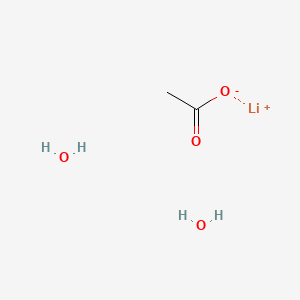
Lithium Acetate 2-Hydrate
Lithium Acetate 2-Hydrate is a premium-grade, white crystalline powder organometallic lithium salt compound carrying CAS number 6108-17-4. Processed under strict industrial quality compliance, this high-purity synthesis active substance exhibits exceptional cell wall permeabilization efficiency and reliable dihydrate matrix stability, making it an ideal core choice for manufacturing molecular biology transformation reagents, advanced anti-static polymer additives, and modern pharmaceutical research lines globally.
Description
Zyntex supplies high-purity Lithium Acetate 2-Hydrate (CAS 6108-17-4) tailored specifically for global pharmaceutical manufacturing plants, biotechnology laboratories, and international polymer compounding loops.
Functioning as a highly specific cellular membrane permeabilizer and organic reaction buffer regulator, it delivers precise substance profiles that ensure uniform liquid batch integration and highly predictable dissolution kinetics in aqueous solvent matrices. Furthermore, its strictly minimized heavy metal impurities and stable dihydrate crystalline matrix geometry make it an ideal selection for sensitive DNA eluation processes and continuous industrial polyester condensation. Accordingly, formulation scientists specify this active substance to stabilize modern alkaline carriers and maintain exact density integrity across continuous processing cycles.
Cell Wall Permeabilization and Condensation Reaction Stability
Excellent crystalline solubility performance and outstanding monoclinic molecular matrix uniformity provide a distinct operational edge when engineering modern fast-acting biochemical transformation buffers. This active chemical solid operates by modifying the cellular lipid bilayer structure of microbial hosts to break down rigid membrane resistance setups, supplying the exact chemical mechanisms required to induce rapid exogenous DNA uptake without altering raw chemical carrier uniformity. It assists processing engineers in maintaining strict active concentration uniformity across high-speed liquid blending and industrial reagent filling lines, mitigating trace sedimentation risks within automated volumetric dosing machinery. For instance, specialized biotechnology facilities incorporate this refined lithium salt powder as a core active component in targeted high-efficiency yeast transformation kit batches. As a consequence, it maximizes the technical throughput of automated packaging machinery and continuous quality assurance checks. Consequently, Zyntex coordinates clean room crystallization paths to eliminate downstream premature dehydration from your factory schedule.
In addition to this, Zyntex coordinates climate-controlled logistics for pilot-scale manufacturing batches and advanced macromolecular research centers. The compound maintains its refined chemical integrity under strict storage parameters, preventing ambient moisture absorption or structural efflorescence during automated mechanical blending steps. It advances contemporary chemical engineering by providing a thoroughly analyzed, highly predictable acetate raw material that meets international ACS technical standards. Simultaneously, it remains a critical chemical standard for routine atomic absorption spectroscopy (AAS) lithium calibration assays and high-performance liquid chromatography (HPLC) compound verification loops. In brief, our product functions as a dependable chemical foundation, supporting both the performance of commercial industrial batches and the analytical rigor of specialized industrial laboratories.
Primary Industrial Sectors for Lithium Acetate 2-Hydrate
This high-purity crystalline active organometallic compound delivers crucial technical value within these four primary industrial sectors:
🧫 Yeast Transformation
Primary biochemical hammadde source used for formulating chemical competent cell buffers to optimize plasmid DNA insertion rates. Hence, it directly supports optimal laboratory control lines.
⚗️ Polymer Catalysis
Utilized as a high-efficiency condensation agent to compound professional alkyd resins, engineering plastics, and ester fibers. Clearly, it is key for uniform dissolving patterns.
⚡ Anti-Static Agents
Acts as an essential conductive additive for regulating surface charge dissipations within specialized synthetic polymer matrix lines. Resultantly, it guarantees excellent matrix clarity.
🏢 Pharma Synthesis
Used as a professional intermediate active building block for validating advanced organolithium reactions and specialized drug carrier loops. Specifically, it confirms optimal reaction pathways.
Technical Specifications
| Parameter | Standard Value |
|---|---|
| Product Name | Lithium Acetate Dihidrat (Lithium Acetate 2-Hydrate) |
| Assay / Purity (Titration) | 98.0% to 102.0% |
| Appearance | White, fine crystalline powder |
| Melting Point | Loses water at 56°C; anhydrous melts at 283°C-285°C |
| pH (5% Aqueous Solution) | 7.5 to 8.5 |
| CAS Number | 6108-17-4 (Dihidrat) / 546-89-4 (Anhydrous) |
⚠️ Safety & Handling (IRRITANT / LITHIUM ION REAGENT): Lithium Acetate 2-Hydrate is an active industrial and laboratory chemical substance. Direct inhalation of crystalline powder dust, prolonged skin surface interaction, or accidental ingestion poses moderate risk factors of acute occupational respiratory membrane tract irritation, painful eye irritation, and potential systemic lityum-induced central nervous system strains if high quantities are absorbed. Therefore, store strictly inside original double-sealed airtight industrial container units located within a cool, meticulously dry, and appropriately ventilated warehouse facility isolated from strong oxidizing compounds and heavy acids. Keep processing containment tightly locked to avoid crystalline efflorescence. Proper personal protective equipment (PPE)—including industrial chemical-resistant nitrile laboratory gloves, secure safety glasses with integrated side frames, and a standard particle-filter dust protective mask—must be worn during all commercial batch blending routines. Review the Safety Data Sheet (SDS).