Cobalt(II) Chloride Hexahydrate
Cobalt(II) Chloride Hexahydrate (CAS 7791-13-1), min. 99.0%, supplied wholesale by Zyntex for professional use. Cobalt source for catalysts, electroplating, pigments and humidity indicators. CoA and SDS with every lot.
Description
Cobalt(II) Chloride Hexahydrate Product Overview
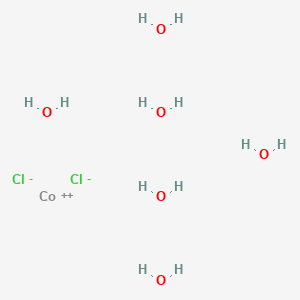
Cobalt(II) chloride hexahydrate (CoCl2·6H2O) forms red to pink crystals that dissolve easily in water and alcohol. When it loses water, it turns blue. This striking color change made it the classic indicator in humidity cards and indicating silica gel.
In addition, industry uses it as a raw material for cobalt catalysts, cobalt compounds and pigments, as a cobalt source in electroplating baths and in chemical synthesis. Because cobalt dichloride counts as a carcinogen and reproductive toxicant in the EU, many silica gel producers have switched to cobalt-free orange indicators.
Notably, it is available only for professional use with appropriate exposure controls. For other cobalt salts, see Cobalt Sulfate, Cobalt(II) Nitrate Hexahydrate and Cobalt(II) oxide; the corresponding nickel salt is Nickel(II) chloride 6-hydrate.
Key Applications of Cobalt(II) Chloride Hexahydrate
Typical uses include, for example:
🧪 Catalysts
Raw material for cobalt-based catalysts.
⚡ Electroplating
Cobalt source in plating baths.
💧 Humidity Indicators
Color-changing indicator for humidity cards.
🎨 Pigments
Raw material for cobalt pigments as well as compounds.
Cobalt(II) Chloride Hexahydrate Technical Specifications
| Parameter | Standard Value |
|---|---|
| Product Name | Cobalt(II) chloride hexahydrate |
| CAS Number | 7791-13-1 |
| Molecular Formula / Weight | CoCl2·6H2O / 237.93 g/mol |
| Assay / Purity | Min 99.0% |
| Appearance | Red-to-pink crystals |
| Documents | CoA as well as SDS with every lot |
⚠️ Safety & Handling: May cause cancer by inhalation, genetic defects and damage to fertility; may cause allergic skin and respiratory reactions; harmful if swallowed and very toxic to aquatic life. For professional use only. Use local exhaust ventilation and wear gloves, eye protection and respiratory protection. Store locked, in tightly closed containers. Always consult the Safety Data Sheet (SDS), because it contains the full classification and handling instructions.
Frequently Asked Questions
Why does cobalt chloride change color?
The hydrated form is pink, while the anhydrous form is blue. As it absorbs or loses water, the color changes, which appears in humidity indicators.
Is cobalt chloride still suitable for indicating silica gel?
In the EU, its CMR classification restricts such uses, and many producers have switched to cobalt-free indicators. Check the rules for your market.
How can I get a price and documents?
Prices depend on quantity, packaging and destination, so please contact us with your required volume. We then send a quotation together with the CoA and SDS.