Astaxanthin
Natural Astaxanthin (CAS 472-61-7) from Haematococcus pluvialis, oleoresin and beadlets, supplied wholesale by Zyntex. Red carotenoid antioxidant for softgels, anti-aging cosmetics and aquaculture feed. CoA and SDS.
Description
Astaxanthin Product Overview
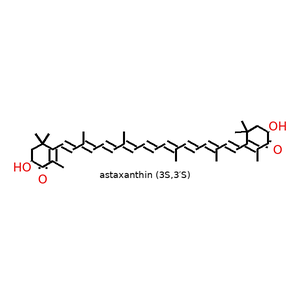
Astaxanthin (C40H52O4) is a deep red carotenoid with keto and hydroxyl groups on both rings, which make it a particularly strong antioxidant. Natural astaxanthin from Haematococcus pluvialis algae occurs mainly as fatty acid esters; it is sensitive to light, heat and oxygen.
In addition, producers of nutritional products use it in softgels for antioxidant, skin, eye and sports formulas, within the regulations of each market. Similarly, cosmetic formulators use it in anti-aging creams and serums, and aquaculture feed producers use astaxanthin to give salmon, trout and shrimp their pink color, often as synthetic or yeast-derived grades for feed.
Notably, related carotenoids in our range include Lutein, Beta Carotene and Coenzyme Q10.
Key Applications of Astaxanthin
Typical uses include, for example:
💊 Softgels
Antioxidant formulas.
✨ Cosmetics
Anti-aging creams and serums.
🐟 Aquaculture
Salmon and shrimp pigmentation.
💪 Sports Nutrition
Recovery formulas.
Astaxanthin Technical Specifications
| Parameter | Standard Value |
|---|---|
| Product Name | Astaxanthin (Haematococcus pluvialis) |
| CAS Number | 472-61-7 |
| Molecular Formula / Weight | C40H52O4 / 596.85 g/mol |
| Forms | Oleoresin 5–10%, beadlet powders 1–3% |
| Source | Haematococcus pluvialis microalgae |
| Documents | CoA and SDS with every lot |
⚠️ Safety & Handling: Not classified as hazardous under GHS. Avoid contact with eyes. Store in tightly closed containers under nitrogen, protected from light, refrigerated. Always consult the Safety Data Sheet (SDS), because it contains the full classification and handling instructions.
Frequently Asked Questions
Is it a natural product?
Yes. It comes from Haematococcus pluvialis microalgae; feed grades can also be quoted.
Why does it need cold, dark storage?
Because light, heat and oxygen degrade it.
How can I get a price and documents?
We supply flexible quantities, from small orders to large volumes, so you do not need to meet the high minimum orders of large producers. Please contact us with your required volume, and we will send a quotation together with the CoA and SDS.