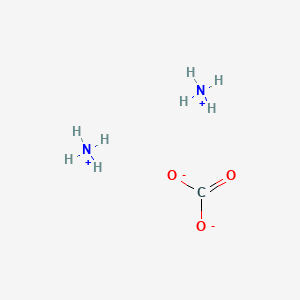
Ammonium Carbonate
Ammonium Carbonate (baker’s ammonia, CAS 506-87-6, E503), 30–34% NH3, supplied wholesale by Zyntex. Volatile leavening agent for cookies and crackers, and ammonia source for ceramics, dyeing and laboratories. CoA and SDS.
Description
Ammonium Carbonate Product Overview
Commercial ammonium carbonate is a white crystalline solid with a strong ammonia odor. In practice it is a mixture of ammonium bicarbonate and ammonium carbamate (CAS 10361-29-2), with an ammonia content of about 30–34%. At around 60°C it decomposes completely into ammonia, carbon dioxide and water, leaving no residue.
This clean decomposition makes it a traditional leavening agent, known as baker’s ammonia or hartshorn, under E number E503. Bakers use it for thin, dry products such as cookies, crackers and flat biscuits, where the ammonia can escape fully during baking. For thicker products, Sodium Bicarbonate is the better choice.
Outside food, it serves as an ammonia source in ceramics and dyeing, a reagent in laboratories and the active component of smelling salts. Related ammonium salts include Ammonium chloride and Ammonium Sulfate.
Key Applications of Ammonium Carbonate
Main application areas:
🍪 Bakery
Leavening agent for cookies, crackers and flat biscuits (E503).
🏺 Ceramics and Dyeing
Ammonia source and pH regulator in processing.
🔬 Laboratory
Volatile buffer and reagent.
🧪 Chemical Uses
Source of ammonia and carbon dioxide in synthesis.
Ammonium Carbonate Technical Specifications
| Parameter | Standard Value |
|---|---|
| Product Name | Ammonium Carbonate |
| CAS Number | 506-87-6 (commercial mixture: 10361-29-2) |
| E Number | E503(i) |
| Ammonia (NH3) Content | 30% – 34% Typical |
| Appearance | White crystalline solid with ammonia odor |
| Documents | CoA and SDS with every lot |
⚠️ Safety & Handling: Harmful if swallowed and causes eye irritation; releases ammonia vapor that irritates the respiratory tract. Handle in well-ventilated areas and wear gloves and eye protection. Store in tightly closed containers in a cool place below 25°C, away from acids and heat, because the product decomposes slowly at room temperature. Always consult the Safety Data Sheet (SDS) for full classification and handling instructions.
Frequently Asked Questions
Why is ammonium carbonate used only in thin bakery products?
It decomposes completely into gases during baking. In thin, dry products the ammonia escapes fully, while in thick or moist products an ammonia taste may remain.
How should ammonium carbonate be stored?
Keep it in tightly closed containers in a cool place. It slowly loses ammonia at room temperature, so long storage in warm conditions reduces its strength.
How can I get a price and documents?
Prices depend on quantity, packaging and destination. Contact us with your required volume to receive a quotation together with the CoA and SDS.