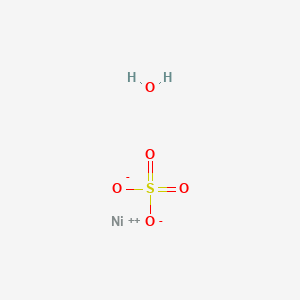
Nickel(II) sulfate
Nickel(II) Sulfate, CAS 7786-81-4) is the most widely used source of nickel for the surface finishing industry. It is essential for decorative and functional electroplating, and as a precursor for various nickel catalysts.
Description
Comprehensive Product Overview
In the field of surface engineering, the ability to achieve uniform thickness and corrosion resistance is a major advantage. Manufacturers specifically select Nickel(II) Sulfate because it serves as the primary component in Watts-type nickel plating baths. For instance, it is used extensively in the production of hardware, electronic connectors, and decorative chrome finishes. Consequently, it facilitates the production of components that combine aesthetic appeal with industrial durability. As a result, Zyntex ensures that our industrial-grade Nickel Sulfate meets rigorous purity standards, with minimal levels of metallic impurities to prevent plating defects.
[Image of nickel electroplating process diagram]
Moreover, the catalyst-grade Nickel(II) Sulfate from Zyntex is a vital component in the development of hydrogenation catalysts. This application allows for the creation of high-purity chemical intermediates in the food and petrochemical industries. Undoubtedly, this pushes the boundaries of what is possible in large-scale organic synthesis. At the same time, the emerging battery sector values its role in the synthesis of precursor materials for lithium-ion battery cathodes. In short, our product serves as a dependable “precision-reagent.” We support companies focusing on both traditional metal finishing and sustainable energy manufacturing.
Recently, scientific interest has surged regarding the use of Nickel Sulfate in the synthesis of nickel-based metal-organic frameworks (MOFs). Researchers apply it in complex laboratory models to study gas storage and separation. Because of this, Zyntex offers specialized bulk formats to ensure seamless integration into both batch and continuous manufacturing processes. Ultimately, you secure a reliable supply partner by choosing Zyntex. We balance chemical potency with rigorous logistical safety protocols. To conclude, our commitment to chemical excellence ensures that your manufacturing processes—whether in electroplating or battery chemistry—achieve the highest levels of quality.
Key Industrial Applications
This versatile nickel salt is specifically vital in the following four sectors:
💠 Electroplating
Zyntex supplies this for nickel plating baths; thus providing the essential ions for protective and decorative metal layers.
🔋 Battery Materials
Used as a precursor for Ni-rich cathode materials; consequently it is vital for the global electric vehicle supply chain.
⚗️ Chemical Synthesis
Manufacturers use it to produce Raney nickel and other catalysts; undoubtedly essential for industrial hydrogenation.
🔬 Laboratory Reagent
Zyntex provides high-purity crystals for analytical chemistry; specifically helping in metal analysis and academic research.
Technical Specifications
| Parameter | Standard Value |
|---|---|
| Product Name | Nickel(II) Sulfate Hexahydrate |
| Nickel Content (Ni) | Min. 22.0% |
| Appearance | Emerald-green crystalline powder/granules |
| CAS Number | 10101-97-0 (Hexahydrate) |
⚠️ Safety Warning: Nickel(II) Sulfate is classified as a human carcinogen, skin sensitizer, and environmental hazard. Therefore, it must be handled with extreme care under strict industrial safety conditions, ensuring proper wastewater treatment for all metal-containing effluents.