Flucloxacillin Sodium
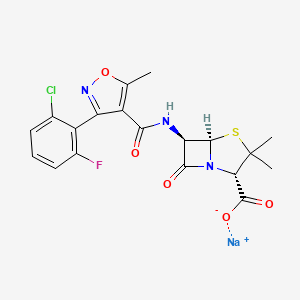
Flucloxacillin Sodium is a semi-synthetic, acid-stable isoxazolyl penicillin. Researchers utilize this API to study the treatment of infections caused by penicillinase-producing staphylococci and other Gram-positive pathogens.
Description
Comprehensive Product Overview
In the evolving field of antibiotic development, the ability to withstand enzymatic degradation defines the clinical utility of beta-lactam compounds. Specifically, Flucloxacillin Sodium functions by inhibiting the synthesis of bacterial cell walls through binding to penicillin-binding proteins (PBPs). Additionally, researchers select this molecule for its unique side-chain structure, which provides steric hindrance against beta-lactamase enzymes (penicillinases). Therefore, whether you investigate staphylococcal biofilm disruption or develop new parenteral formulations, this API delivers reliable pharmacological support across various laboratory conditions.
Zyntex maintains a transparent production chain to ensure a precise impurity profile for every batch, focusing on the limitation of 2-ethylhexanoic acid and residual solvents. Moreover, our quality control team verifies every lot for pH stability and water of crystallization to ensure the integrity of lyophilized and oral dosages. For instance, we optimize the crystalline structure to support the development of high-stability intravenous solutions used in critical care research. As a result, your lab receives a high-purity reagent for advanced studies into the kinetics of bacterial lysis and the prevention of post-operative surgical site infections.
Modern clinical science relies on high-quality isoxazolyl penicillins to address the persistent challenge of Staphylococcus aureus and Streptococcus pyogenes. Because Flucloxacillin possesses a documented ability to maintain efficacy in acidic environments, it remains a primary focus for studies involving oral bioavailability and gastric absorption kinetics. Ultimately, Zyntex provides a dependable foundation for your next innovation in antimicrobial stewardship and specialized pharmaceutical engineering.
Specialized Antimicrobial Applications
This high-potency beta-lactamase-resistant antibiotic is vital for the following research and production sectors:
🧬 Cell Wall Synthesis Studies
Scientists use Flucloxacillin to investigate the transpeptidation blockade during peptidoglycan assembly in Gram-positive bacteria.
🦠 Resistance Research
Researchers include this API in protocols focused on the susceptibility of beta-lactamase-producing strains and the kinetics of enzyme inhibition.
🧪 Synergistic Modeling
Biotechnicians utilize this molecule to study combination therapies with other antibiotics to expand the antimicrobial spectrum.
💊 Formulation Development
This compound serves as a core reactant for engineering stable, 250mg and 500mg capsules and intravenous clinical injectable formulations.
Technical Specifications
| Parameter | Specification Standard |
|---|---|
| Product Name | Flucloxacillin Sodium (CAS 1847-24-1) |
| Molecular Formula | C19H16ClFN3NaO5S · H2O |
| Purity | USP / BP / Ph. Eur. Grade (Min. 98%) |
| Appearance | White or almost white crystalline powder |
| Solubility | Freely soluble in Water and Ethanol |
🔬 Scientific Data: For detailed antimicrobial spectrum, transport mechanisms, and chemical profiling, consult: PubChem Entry: Flucloxacillin Sodium (External Link)