Bromoacetyl Bromide
Bromoacetyl Bromide (CAS 598-21-0), ≥98%, supplied wholesale by Zyntex for professional use. Highly reactive acyl halide for bromoacetylation in pharmaceutical, agrochemical, bioconjugation and fine chemical synthesis. CoA and SDS.
Description
Bromoacetyl Bromide Product Overview
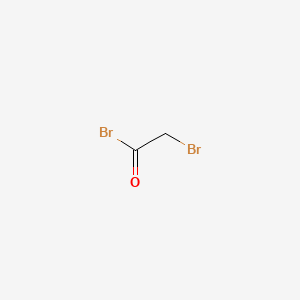
Bromoacetyl bromide (BrCH2COBr) is a clear, colorless to pale yellow or pinkish liquid with a very high density of about 2.32 g/mL. It boils at about 147–150°C and fumes in moist air.
Chemists use it to attach a bromoacetyl group to amines and alcohols. The resulting bromoacetamides and esters are reactive building blocks for heterocycles, pharmaceutical intermediates and agrochemicals, and in biochemistry bromoacetyl groups are used to link peptides to proteins. It is more reactive than chloroacetyl chloride.
It reacts violently with water, releasing hydrogen bromide, and is a strong lachrymator. Related reactive reagents in our range include Methanesulfonyl Chloride and Benzenesulfonyl Chloride.
Key Applications of Bromoacetyl Bromide
Main application areas:
💊 Pharmaceutical Synthesis
Bromoacetylation for API intermediates.
🌱 Agrochemicals
Building block for crop protection intermediates.
🧬 Bioconjugation
Introduction of bromoacetyl groups for peptide coupling.
🧪 Fine Chemicals
Reagent for heterocycle synthesis.
Bromoacetyl Bromide Technical Specifications
| Parameter | Standard Value |
|---|---|
| Product Name | Bromoacetyl Bromide |
| CAS Number | 598-21-0 |
| Molecular Formula / Weight | C2H2Br2O / 201.85 g/mol |
| Assay / Purity | ≥ 98.0% |
| Appearance | Clear, colorless to pale yellow or pinkish liquid |
| Boiling Point | 147 °C to 150 °C |
| Density | 2.317 g/mL at 25 °C |
| Documents | CoA and SDS with every lot |
⚠️ Safety & Handling: Causes severe skin burns and eye damage, is toxic if inhaled and reacts violently with water, releasing hydrogen bromide; strong lachrymator. For professional use only in fume hoods or closed systems with full protective equipment and respiratory protection. Store in tightly closed containers under dry inert gas, away from water, alcohols and bases. Always consult the Safety Data Sheet (SDS) for full classification and handling instructions.
Frequently Asked Questions
How should bromoacetyl bromide be handled?
Only in a fume hood or closed system with full protective equipment, because it fumes in moist air and reacts violently with water.
How does it compare with chloroacetyl chloride?
Both introduce haloacetyl groups, but the bromo compound is more reactive and gives more reactive products.
How can I get a price and documents?
Prices depend on quantity, packaging and destination. Contact us with your required volume to receive a quotation together with the CoA and SDS.