
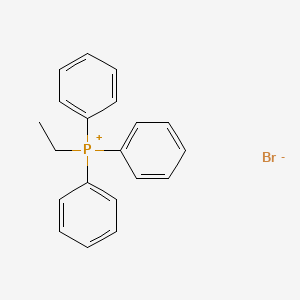
Ethyltriphenylphosphonium Bromide
Ethyltriphenylphosphonium bromide is a quaternary phosphonium salt utilized extensively as a phase transfer catalyst and as a precursor for generating phosphorus ylides in Wittig reactions
Description
Comprehensive Product Overview
In the field of synthetic organic chemistry, the formation of carbon-carbon double bonds defines the architecture of many pharmaceutical active ingredients. Specifically, Ethyltriphenylphosphonium bromide functions as a primary precursor for the ethylidene-triphenylphosphorane ylide. Additionally, researchers select this molecule for its role as a robust Phase Transfer Catalyst (PTC), enabling reactions between salts in aqueous phases and organic substrates. Therefore, whether you investigate the synthesis of natural products or develop advanced epoxy curing agents, this reagent delivers reliable chemical support across various laboratory conditions.
Zyntex maintains a transparent production chain to ensure a precise analytical profile for every batch, focusing on the limitation of free triphenylphosphine levels. Moreover, our quality control team verifies every lot for melting point accuracy and solubility to ensure predictable performance in anhydrous solvents. For instance, we optimize the crystalline grade to support the development of specialized coatings and thermosetting resins where it acts as a latent accelerator. As a result, your lab receives a high-purity catalyst for advanced studies into nucleophilic substitution and the stereoselective construction of alkenes.
Modern industrial science relies on high-quality phosphonium salts to overcome the kinetic barriers of immiscible reactants. Because Ethyltriphenylphosphonium bromide possesses documented high thermal stability and broad solvent compatibility, it remains a primary focus for studies involving high-temperature polymerizations. Ultimately, Zyntex provides a dependable foundation for your next innovation in chemical engineering and specialized pharmaceutical synthesis.
Specialized Synthetic Applications
This high-performance phosphonium salt is vital for the following research and production sectors:
🧪 Wittig Olefination
Scientists use ETPB to generate ylides that react with aldehydes and ketones to produce substituted alkenes with high precision.
🔄 Phase Transfer Catalysis
Researchers include this reagent in biphasic systems to facilitate the transport of anions into the organic phase for rapid reaction.
🏗️ Polymer Acceleration
Biotechnicians and material scientists utilize this molecule as an accelerator for the curing of epoxy resins and powder coatings.
💊 API Intermediate Synthesis
This compound serves as a core reactant for engineering complex carbon skeletons in the development of pharmaceutical actives.
Technical Specifications
| Parameter | Specification Standard |
|---|---|
| Product Name | Ethyltriphenylphosphonium bromide (CAS 1530-32-1) |
| Molecular Formula | C20H20BrP |
| Purity | Reagent Grade (Min. 99%) |
| Appearance | White to off-white crystalline powder |
| Melting Point | 203°C – 205°C |
🔬 Scientific Data: For detailed spectral data, ylide formation protocols, and safety data sheets, consult: PubChem Entry: Ethyltriphenylphosphonium bromide (External Link)