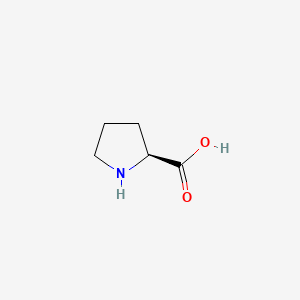
L-Proline
High-purity L-Proline (CAS 147-85-3), 99–101%, fermentation-derived, supplied wholesale by Zyntex. Amino acid for cell culture, infusions, collagen-related cosmetics, flavors and asymmetric organocatalysis. CoA and SDS.
Description
L-Proline Product Overview
L-Proline (C5H9NO2) is a white crystalline powder that dissolves very easily in water and has a slightly sweet taste. Unlike other amino acids, its amino group is part of a ring, which gives proteins such as collagen their special structure. The commercial grade comes from fermentation.
In addition, biotech and pharmaceutical companies use it in cell culture media and amino acid infusions. Similarly, cosmetic formulators use it in skin care products related to collagen, and producers of nutritional products often combine it with Collagen peptide. Food producers also use it in flavors, where it contributes to Maillard reaction aromas.
Furthermore, in chemistry, it is a classic organocatalyst for asymmetric aldol and Mannich reactions and a chiral building block for pharmaceuticals. Other amino acids in our range also include Glycine, L-Serine and L-Tyrosine.
Key Applications of L-Proline
Typical uses include, for example:
🧫 Cell Culture
Amino acid in cell culture media.
💉 Infusions
Component of amino acid infusions.
🧴 Cosmetics
Ingredient in collagen-related skin care.
⚗️ Organocatalysis
Catalyst for asymmetric aldol as well as Mannich reactions.
L-Proline Technical Specifications
| Parameter | Standard Value |
|---|---|
| Product Name | L-Proline |
| CAS Number | 147-85-3 |
| Molecular Formula / Weight | C5H9NO2 / 115.13 g/mol |
| Assay / Purity | 99.0% – 101.0% |
| Specific Rotation | -84.3° to -86.3° |
| Documents | CoA as well as SDS with every lot |
⚠️ Safety & Handling: Not classified as hazardous under GHS. Avoid dust formation and contact with eyes. Store in tightly closed containers in a cool, dry place, so that the material stays in good condition. Always consult the Safety Data Sheet (SDS), because it contains the full classification and handling instructions.
Frequently Asked Questions
Why is L-proline used as a catalyst?
Because its ring structure and chirality allow it to catalyze aldol and Mannich reactions enantioselectively without metals.
Which grades do you supply?
Pharmaceutical, cell culture, food and cosmetic grades are available, so please state your application.
How can I get a price and documents?
Prices depend on quantity, packaging and destination, so please contact us with your required volume. We then send a quotation together with the CoA and SDS.