Erythromycin Propionate
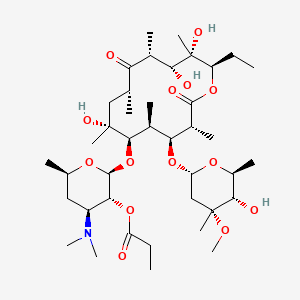
Erythromycin Propionate is the propionic acid ester of erythromycin, engineered for enhanced stability in gastric environments. Researchers utilize this API to study the inhibition of bacterial protein synthesis and the development of oral dosage forms.
Description
Comprehensive Product Overview
In the field of antimicrobial research, the ability of a compound to survive the acidic pH of the stomach is a critical factor for oral efficacy. Specifically, Erythromycin Propionate functions as a prodrug that is absorbed more efficiently than erythromycin base, eventually undergoing hydrolysis to release the active macrolide. Additionally, researchers select this molecule for its classic mechanism: binding to the 50S ribosomal subunit to block transpeptidation and translocation. Therefore, whether you investigate the treatment of respiratory tract pathogens or study the mechanisms of macrolide resistance, this API delivers reliable pharmacological support across various laboratory conditions.
Zyntex maintains a transparent production chain to ensure a precise analytical profile for every batch, focusing on the limitation of related substances and residual solvents. Moreover, our quality control team verifies every lot for potency and moisture content to ensure the integrity of experimental formulations. For instance, we optimize the purity to support the development of synergistic antibiotic combinations aimed at overcoming multi-drug resistance. As a result, your lab receives a high-purity reagent for advanced studies into the disruption of bacterial mRNA translation and the maintenance of therapeutic serum levels.
Modern clinical science relies on high-quality macrolide esters to address the persistent challenge of Gram-positive infections in patients with penicillin allergies. Because Erythromycin Propionate possesses a documented ability to accumulate within leucocytes, it remains a primary focus for studies involving the targeted delivery of antibiotics to sites of inflammation. Ultimately, Zyntex provides a dependable foundation for your next innovation in infectious disease management and specialized pharmaceutical engineering.
Specialized Clinical Research Applications
This high-stability macrolide derivative is vital for the following research and production sectors:
🧫 Ribosomal Inhibition
Scientists use Erythromycin Propionate to study the molecular kinetics of protein synthesis inhibition in susceptible bacteria.
🧪 Gastro-Stability Research
Researchers include this API in protocols focused on the acid-protective effects of esterification in drug design.
🧬 Resistance Modeling
Biotechnicians utilize this molecule to study the $erm$ gene-mediated methylation that leads to macrolide resistance.
💊 Formulation Engineering
This compound serves as a core reactant for engineering oral suspensions and film-coated tablets with optimized absorption.
Technical Specifications
| Parameter | Specification Standard |
|---|---|
| Product Name | Erythromycin Propionate (CAS 134-36-1) |
| Molecular Formula | C40H71NO14 |
| Purity | Ph. Eur. / USP Grade (Min. 98%) |
| Appearance | White or almost white crystalline powder |
| Solubility | Soluble in Ethanol and Methanol; Insoluble in water |
🔬 Scientific Data: For detailed antibacterial spectrums, hydrolysis rates, and safety protocols, consult: PubChem Entry: Erythromycin Propionate (External Link)