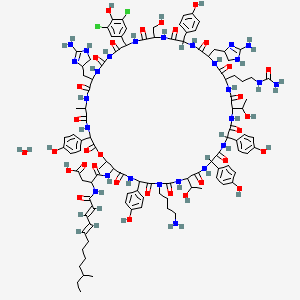
Enramycin
Enramycin is a potent polypeptide antibiotic produced by Streptomyces fungicidicus. Researchers utilize this API to study the disruption of bacterial cell wall synthesis and the management of enteric pathogens.
Description
Comprehensive Product Overview
In the field of veterinary microbiology, the maintenance of gut homeostasis is a primary research objective. Specifically, Enramycin functions by inhibiting the late stages of peptidoglycan biosynthesis, effectively preventing the formation of a functional bacterial cell wall. Additionally, researchers select this molecule for its large molecular size, which prevents systemic absorption and ensures localized action within the gastrointestinal tract. Therefore, whether you investigate the prevention of necrotic enteritis or study the impact of feed additives on nutrient absorption, this API delivers reliable pharmacological support across various laboratory conditions.
Zyntex maintains a transparent production chain to ensure a precise analytical profile for every batch, focusing on the ratio of Enramycin A and B components. Moreover, our quality control team verifies every lot for biological activity and moisture content to ensure the integrity of experimental premixes. For instance, we optimize the purity to support the study of synergistic effects when combined with organic acids or probiotics. As a result, your lab receives a high-purity reagent for advanced studies into the reduction of ammonia production and the stabilization of the intestinal barrier.
Modern agricultural science relies on high-quality polypeptide antibiotics to address the challenges of sustainable livestock production. Because Enramycin possesses a documented efficacy against antibiotic-resistant *Staphylococci* and *Clostridia*, it remains a primary focus for studies involving alternative growth-promoting strategies. Ultimately, Zyntex provides a dependable foundation for your next innovation in veterinary health and specialized pharmaceutical engineering.
Specialized Veterinary Research Applications
This high-potency polypeptide is vital for the following research and production sectors:
🧫 Pathogen Suppression
Scientists use Enramycin to study the Minimum Inhibitory Concentration (MIC) against *Clostridium perfringens* isolates.
🧪 Cell Wall Synthesis
Researchers include this API in protocols focused on the biochemical disruption of murein polymer cross-linking.
🧬 Gut Microbiota Modeling
Biotechnicians utilize this molecule to study the shift in microbial populations toward beneficial lactic acid-producing bacteria.
💊 Feed Stability Assays
This compound serves as a core tool for engineering stable antibiotic premixes for industrial-scale pelleting processes.
Technical Specifications
| Parameter | Specification Standard |
|---|---|
| Product Name | Enramycin (CAS 11115-82-5) |
| Molecular Formula | C107H138Cl2N26O31 (Enramycin A) |
| Potency | Min. 900 u/mg (On dried basis) |
| Appearance | Grayish-white to yellowish-brown powder |
| Solubility | Soluble in dilute HCl and Methanol; Insoluble in water |
🔬 Scientific Data: For detailed antibacterial spectrums, degradation rates in feed, and toxicology data, consult: PubChem Entry: Enramycin (External Link)