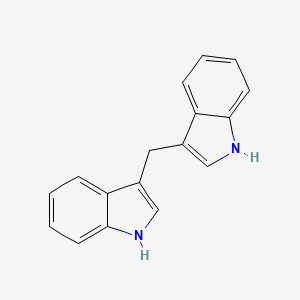
Diindolylmethane
High-purity Diindolylmethane (DIM, CAS 1968-05-4), min. 98% HPLC, supplied wholesale by Zyntex. Indole compound related to cruciferous vegetables for nutritional products, research and formulation work. CoA and SDS with every lot.
Description
Diindolylmethane Product Overview
3,3′-Diindolylmethane (C17H14N2) is a white to off-white crystalline powder that is insoluble in water and soluble in ethanol and DMSO. It melts at about 166–170°C. In the body and in the stomach, it forms from indole-3-carbinol, a compound found in broccoli, cabbage and other cruciferous vegetables.
Producers of nutritional products use DIM in capsules and tablets, under the regulations of each market. Because of its very low water solubility, formulations often use complexes or lipid-based systems to improve dispersion. Researchers use DIM widely in studies on cellular signaling and plant compounds.
For another plant-derived ingredient with a similar profile in our range, see Turmeric Extract and Grape Seed Extract.
Key Applications of Diindolylmethane
Main application areas:
🥤 Nutritional Products
Ingredient in capsules and tablets.
🔬 Research
Reference compound for indole research.
🧪 Formulation
Raw material for dispersible complexes.
🧴 Cosmetics
Ingredient in some skin care formulations.
Diindolylmethane Technical Specifications
| Parameter | Standard Value |
|---|---|
| Product Name | Diindolylmethane (DIM) |
| CAS Number | 1968-05-4 |
| Molecular Formula / Weight | C17H14N2 / 246.31 g/mol |
| Assay / Purity | Min 98.0% (HPLC Basis) |
| Appearance | White to off-white crystalline powder |
| Melting Point | 166.0°C – 170.0°C |
| Solubility | Insoluble in water; soluble in organic solvents like DMSO and Ethanol |
| Documents | CoA and SDS with every lot |
⚠️ Safety & Handling: May cause skin, eye and respiratory irritation. Avoid dust formation and wear gloves and eye protection. Store in tightly closed, light-resistant containers in a cool, dry place. Always consult the Safety Data Sheet (SDS) for full classification and handling instructions.
Frequently Asked Questions
Where does DIM come from?
It forms naturally from indole-3-carbinol, found in cruciferous vegetables. Commercial DIM is produced by chemical synthesis.
How can DIM be formulated despite its low solubility?
Formulators use lipid-based systems or complexes, for example with cyclodextrins or phospholipids, to improve dispersion.
How can I get a price and documents?
Prices depend on quantity, packaging and destination. Contact us with your required volume to receive a quotation together with the CoA and SDS.