Diethyl Carbonate
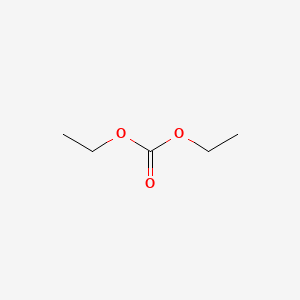
Diethyl Carbonate is a premium-grade, clear organic carbonate ester liquid with CAS number 105-58-8. This high-purity, low-viscosity volatile solvent is widely utilized across the global industrial chemistry sector to manufacture advanced lithium-ion battery electrolytes, specialized polymer resins, and fine pharmaceutical synthesis matrices.
Description
Comprehensive Product Overview of Diethyl Carbonate
Exceptional structural durability and rapid compound dissolution provide a major competitive advantage in the formulation of specialized technical solutions. This active material solvent works by providing the essential structural mechanisms—specifically serving as an excellent co-solvent matrix to lower electrolyte viscosity—needed for effective process stabilization. It helps manufacturers achieve potent technical profiles in advanced energy and industrial coating systems without sacrificing component or system integrity. For instance, Diethyl Carbonate is frequently used as a primary ingredient in high-performance lithium-ion battery packs. Consequently, it improves the technical efficacy of modern electric vehicle batteries and electronic power grid systems. As a result, Zyntex ensures ultra-low water content and strict impurity control for our supply, ensuring maximum safety during your manufacturing cycle.
Moreover, Zyntex supplies specialized solution-ready grades for the synthetic polymer and pharmaceutical synthesis industries. This compound acts as a critical structural asset, helping to enhance the reaction mechanics of target organic matrices undergoing intense ethoxylation or carbonylation processing cycles. It pushes the boundaries of modern material science by offering a highly pure active liquid source that does not affect the final material’s core electrical parameters unless requested. At the same time, it serves as a crucial raw material matrix in the synthesis of specialized pharmaceutical active intermediates and fine chemical blends. In short, our product serves as a dependable “structural matrix.” It supports both the vitality of industrial manufacturing and the precision of modern material engineering.
Key Industrial Applications for Diethyl Carbonate
This high-purity clear volatile organic ester solvent is essential in these four primary sectors:
🔋 Battery Electrolytes
Primary co-solvent component used for blending high-conductivity lithium-ion battery fluids. Thus, it provides essential support for localized low-temperature discharge.
🧪 Chemical Synthesis
Key ethoxylation and carbonylation agent utilized for creating custom pharmaceutical rings. Undoubtedly, it is vital for enhancing uniform organic synthesis benchmarks.
🏢 Polymers & Resins
Used as a professional polymerizing solvent matrix for premium plastic resin synthesis runs. Consequently, it is vital for high-performance fluid thinning controls.
🏭 Technical Inks
Acts as a specialized processing solvent auxiliary for manufacturing commercial nitrocellulose lacquers. Specifically, it supports rapid compounding and uniform coat clarity.
Technical Specifications
| Parameter | Standard Value |
|---|---|
| Product Name | Diethyl Carbonate (Battery / Synthesis Grade) |
| Assay / Purity | ≥ 99.9% (Electronic Battery Grade) |
| Appearance | Clear, colorless, transparent liquid |
| Flash Point | 25 °C (Closed Cup) |
| Moisture Content (H2O) | ≤ 20 ppm (Karl Fischer) |
| CAS Number | 105-58-8 |
📝 Safety & Handling: Formulated strictly for controlled battery fabrication, fine electronic polymer blending, and professional industrial solvent workflows. Diethyl Carbonate is a flammable organic liquid with a low flash point of 25°C, meaning its volatile vapors can form explosive mixtures with air and cause mild dizziness, respiratory track irritation, or skin defatting upon contact. Therefore, store strictly in a cool, dry, flame-proof location away from direct sunlight, open sparks, high-temperature surfaces, and strong oxidizing materials under an inert gas blanket. Keep container seals absolutely tight to avoid volatile evaporation or atmospheric moisture absorption, which destroys battery-grade conductivity parameters. Operating with spark-proof tools, active ventilation systems, and wearing full protective equipment (PPE)—including chemical-resistant nitrile gloves, safety goggles, and antistatic clothing—is mandatory. Always consult the Safety Data Sheet (SDS) for detailed protocols.