Camphor
Natural and synthetic Camphor (CAS 76-22-2), 96–99%, supplied wholesale by Zyntex as powder, crystals or tablets. For topical rubs and balms, fragrances, insect repellents and celluloid. CoA and SDS with every lot.
Description
Camphor Product Overview
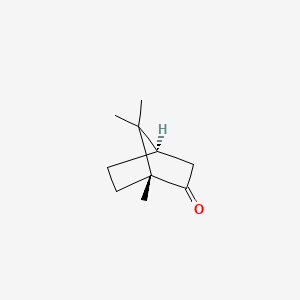
Camphor (C10H16O) forms white, translucent crystals or tablets with a characteristic cool, medicinal odor. It evaporates slowly at room temperature (sublimes) and dissolves easily in alcohol and oils, but hardly in water. The natural grade (D-camphor, CAS 464-49-3) comes from the wood of Cinnamomum camphora, while the synthetic grade is a racemic mixture made from alpha-pinene obtained from Turpentine Oil.
Pharmaceutical companies use it in topical rubs, balms, ointments and inhalation products, where it gives a cooling and warming sensation; it frequently appears alongside (+)-Menthol (D-Menthol). Fragrance and household product producers use it for its fresh, medicinal note and in moth and insect repellents.
Historically, camphor was the plasticizer that made celluloid possible, and it still has technical uses in celluloid, lacquers and pyrotechnics. It also plays a role in religious and ceremonial uses in South Asia, where tablet forms are common.
Key Applications of Camphor
Main application areas:
💊 Topical Preparations
Ingredient in rubs, balms, ointments and inhalants.
🦟 Repellents
Moth and insect repellent products.
🧴 Fragrances
Fresh, medicinal note in fragrances and household products.
🏭 Technical Uses
Plasticizer for celluloid and component in lacquers.
Camphor Technical Specifications
| Parameter | Standard Value |
|---|---|
| Product Name | Camphor (Natural or Synthetic) |
| CAS Number | 76-22-2 (natural D-camphor: 464-49-3) |
| EC Number | 200-945-0 |
| Molecular Formula / Weight | C10H16O / 152.23 g/mol |
| Assay / Purity | Min. 96.0% – 99.0% |
| Melting Point | 174°C to 179°C |
| Documents | CoA and SDS with every lot |
⚠️ Safety & Handling: Flammable solid; its vapor can form explosive mixtures with air. Harmful if swallowed or inhaled, and keep out of the reach of children. Keep away from heat and ignition sources, avoid inhaling vapors and dust, and wear gloves and eye protection. Store in tightly closed containers in a cool, ventilated place, as it sublimes slowly. Always consult the Safety Data Sheet (SDS) for full classification and handling instructions.
Frequently Asked Questions
What is the difference between natural and synthetic grades?
The natural grade is the pure D-isomer from Cinnamomum camphora. The synthetic grade, made from pinene, is a racemic mixture of D- and L-isomers. Both are available on request.
Which forms do you supply?
Powder, crystals and pressed tablets can be offered. Please state the form and grade when requesting a quote.
How can I get a price and documents?
Prices depend on quantity, packaging and destination. Contact us with your required volume to receive a quotation together with the CoA and SDS.