4-Chlorophenyl Isocyanate
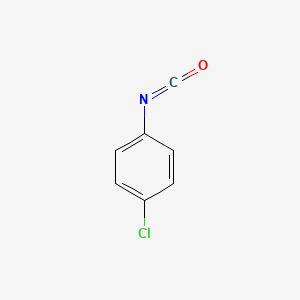
4-Chlorophenyl Isocyanate (CAS 104-12-1), ≥98.0%, supplied wholesale by Zyntex. Aromatic isocyanate building block for benzoylurea insecticides, urea herbicides and pharmaceutical intermediates. CoA and SDS with every lot.
Description
4-Chlorophenyl Isocyanate Product Overview
4-Chlorophenyl isocyanate (C7H4ClNO) is a white to pale yellow solid with a low melting point of about 26–29°C, so it may be liquid in warm conditions. Its isocyanate group reacts readily with amines, alcohols and water.
Agrochemical producers react it with amides and amines to make phenylurea and benzoylurea actives, including the insect growth regulator diflubenzuron and urea herbicides. Pharmaceutical chemists use it to build urea and carbamate structures in drug candidates and intermediates.
Because it reacts with moisture, it must be stored dry. For other isocyanates in our range, see Cyclohexyl isocyanate and Phenethyl Isocyanate; for chloroformate reagents, see 2-Ethylhexyl chloroformate.
Key Applications of 4-Chlorophenyl Isocyanate
Main application areas:
🌱 Agrochemicals
Building block for benzoylurea and phenylurea actives.
💊 Pharmaceutical Intermediates
Reagent for ureas and carbamates.
🧪 Fine Chemicals
Isocyanate building block for specialty chemicals.
🔬 Research
Derivatization reagent in synthesis.
4-Chlorophenyl Isocyanate Technical Specifications
| Parameter | Standard Value |
|---|---|
| Product Name | 4-Chlorophenyl Isocyanate |
| CAS Number | 104-12-1 |
| EC Number | 203-176-9 |
| Molecular Formula / Weight | C7H4ClNO / 153.57 g/mol |
| Assay (Purity) | ≥ 98.0% |
| Melting Point | approx. 26–29°C |
| Documents | CoA and SDS with every lot |
⚠️ Safety & Handling: Toxic if inhaled, may cause allergy or asthma symptoms if inhaled, causes skin and serious eye irritation, and is a lachrymator. Handle only in fume hoods or closed systems with chemical-resistant gloves, goggles and respiratory protection. Store in tightly closed containers under dry conditions, away from water, alcohols and amines. Always consult the Safety Data Sheet (SDS) for full classification and handling instructions.
Frequently Asked Questions
Why does 4-chlorophenyl isocyanate need dry storage?
Isocyanates react with water to form ureas and carbon dioxide, which reduces purity and can build pressure in closed containers.
What is it mainly used for?
It is mainly a building block for benzoylurea insecticides such as diflubenzuron, urea herbicides and pharmaceutical intermediates.
How can I get a price and documents?
Prices depend on quantity, packaging and destination. Contact us with your required volume to receive a quotation together with the CoA and SDS.