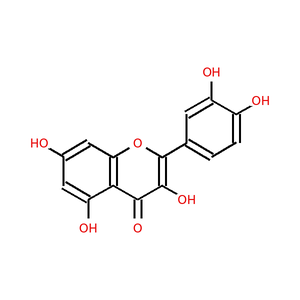
Quercetin
Quercetin (CAS 117-39-5 / dihydrate 6151-25-3), 95–98% HPLC, from Sophora japonica, supplied wholesale by Zyntex. Flavonol antioxidant for nutritional products, functional foods and cosmetics. CoA and SDS with every lot.
Description
Quercetin Product Overview
Quercetin (C15H10O7) is a yellow crystalline powder that is practically insoluble in water. Commercial quercetin is usually the dihydrate, made from rutin extracted from the flower buds of Sophora japonica.
In addition, producers of nutritional products use it in capsules and tablets, often combined with vitamin C, bromelain or Resveratrol, within the regulations of each market. Similarly, food producers use it in functional foods and drinks, and cosmetic formulators use it as an antioxidant. Researchers also use it widely as a reference flavonoid.
Because its water solubility is low, producers sometimes use special formulations to improve dispersion. Related plant actives in our range include Green Tea Extract, Grape Seed Extract and Ascorbic Acid (Vitamin C).
Key Applications of Quercetin
Typical uses include, for example:
💊 Nutritional Products
Capsules and tablets.
🥤 Functional Foods
Drinks and powders.
🧴 Cosmetics
Antioxidant ingredient.
🔬 Research
Reference flavonoid.
Quercetin Technical Specifications
| Parameter | Standard Value |
|---|---|
| Product Name | Quercetin (Dihydrate) |
| CAS Number | 117-39-5 (anhydrous) / 6151-25-3 (dihydrate) |
| Molecular Formula / Weight | C15H10O7 / 302.24 g/mol (anhydrous) |
| Purity (HPLC) | 95% – 98% |
| Source | Sophora japonica |
| Appearance | Yellow crystalline powder |
| Documents | CoA and SDS with every lot |
⚠️ Safety & Handling: Toxic if swallowed in large amounts and may cause eye irritation. Avoid dust and contact, and also wear gloves and eye protection. Store in tightly closed, light-resistant containers in a cool, dry place. Always consult the Safety Data Sheet (SDS), because it contains the full classification and handling instructions.
Frequently Asked Questions
Where does commercial quercetin come from?
Mainly from rutin extracted from Sophora japonica flower buds.
Is it the anhydrous or dihydrate form?
Usually the dihydrate; the anhydrous form can be quoted on request.
How can I get a price and documents?
We supply flexible quantities, from small orders to large volumes, so you do not need to meet the high minimum orders of large producers. Please contact us with your required volume, and we will send a quotation together with the CoA and SDS.