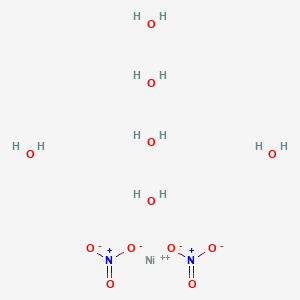
Nickel(II) Nitrate 6-Hydrate
Nickel(II) Nitrate Hexahydrate (CAS 13478-00-7), ~20% Ni, supplied wholesale by Zyntex for professional use. Soluble nickel source for reforming and hydrogenation catalysts, battery precursors, plating and ceramic colors. CoA and SDS.
Description
Nickel(II) Nitrate Hexahydrate Product Overview
Nickel(II) nitrate hexahydrate (Ni(NO3)2·6H2O) forms green, deliquescent crystals that dissolve extremely easily in water (about 940 g/L at 20°C). It also contains about 20% nickel and is an oxidizer.
Catalyst producers use it to impregnate alumina and other supports for nickel steam reforming, methanation and hydrogenation catalysts, because the nitrate decomposes cleanly to nickel oxide. Similarly, battery researchers use it as a nickel source for cathode precursors and nickel hydroxide, while ceramic producers use it for colors. Its cobalt analogue is Cobalt(II) Nitrate Hexahydrate.
Because nickel compounds count in the EU as carcinogenic and sensitizing, and the nitrate is also an oxidizer, Zyntex supplies it only for professional use. Other nickel salts in our range also include Nickel Sulfate and Nickel(II) acetate 4-hydrate.
Key Applications of Nickel(II) Nitrate Hexahydrate
Typical uses include, for example:
⚗️ Catalysts
Nickel source for reforming as well as hydrogenation catalysts.
🔋 Battery Research
Precursor for cathodes as well as nickel hydroxide.
⚡ Electroplating
Nickel source for special baths.
🏺 Ceramics
Nickel colorant for glazes.
Nickel(II) Nitrate Hexahydrate Technical Specifications
| Parameter | Standard Value |
|---|---|
| Product Name | Nickel(II) Nitrate Hexahydrate |
| CAS Number | 13478-00-7 |
| Molecular Formula / Weight | Ni(NO3)2·6H2O / 290.79 g/mol |
| Assay (Ni Content) | Approx. 20.0% Ni |
| Solubility in Water | 940 g/L (at 20°C) |
| Documents | CoA as well as SDS with every lot |
⚠️ Safety & Handling: Oxidizing solid that may intensify fire; may cause cancer by inhalation, genetic defects and damage to the unborn child; may cause allergic skin and respiratory reactions; very toxic to aquatic life. For professional use only, so keep away from combustible materials and also wear respiratory protection, gloves and protective clothing. Store locked in a cool, dry place. Always consult the Safety Data Sheet (SDS), because it contains the full classification and handling instructions.
Frequently Asked Questions
Why is nickel nitrate used for catalyst preparation?
Because it dissolves easily and decomposes cleanly to nickel oxide, it leaves no sulfate or chloride residues on the catalyst.
Who can purchase nickel nitrate?
Only professional industrial users, because nickel compounds count as carcinogenic and the nitrate is an oxidizer.
How can I get a price and documents?
Prices depend on quantity, packaging and destination, so please contact us with your required volume. We then send a quotation together with the CoA and SDS.