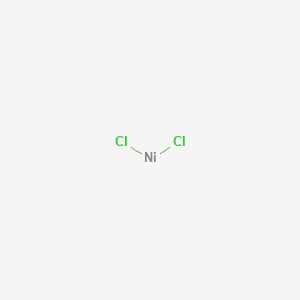
Nickel(II) Chloride Anhydrous
Anhydrous Nickel(II) Chloride (NiCl2, CAS 7718-54-9), min. 99%, supplied wholesale by Zyntex for professional use. Water-free nickel source for catalyst precursors, cross-coupling, ZEBRA battery research and molten salts. CoA and SDS.
Description
Nickel(II) Chloride Anhydrous Product Overview
Anhydrous nickel(II) chloride (NiCl2) is a yellow to yellow-brown powder that absorbs moisture quickly and turns green as it forms the hexahydrate. Users choose the anhydrous form when water would interfere with a reaction or process.
In addition, chemists use it as a precursor for nickel catalysts in cross-coupling, hydrogenation and other organic reactions, often after converting it into complexes with phosphines or ethers. Similarly, battery researchers use it in sodium–nickel chloride (ZEBRA) cells and molten-salt systems. For electroplating, the hexahydrate Nickel(II) chloride 6-hydrate usually remains preferred.
Because nickel compounds count in the EU as carcinogenic and sensitizing, Zyntex supplies anhydrous nickel chloride only for professional use. Other nickel salts in our range also include Nickel Sulfate and Nickel(II) acetate 4-hydrate.
Key Applications of Nickel(II) Chloride Anhydrous
Typical uses include, for example:
⚗️ Catalyst Precursor
Starting material for nickel catalysts.
🧪 Organic Synthesis
Water-free nickel source for cross-coupling.
🔋 Battery Research
Component of sodium–nickel chloride cells.
🔥 Molten Salts
Component for high-temperature salt systems.
Nickel(II) Chloride Anhydrous Technical Specifications
| Parameter | Standard Value |
|---|---|
| Product Name | Nickel(II) Chloride Anhydrous |
| CAS Number | 7718-54-9 |
| Molecular Formula / Weight | NiCl2 / 129.60 g/mol |
| Purity | Min. 99% |
| Physical State | Yellow-Brown Powder |
| Documents | CoA as well as SDS with every lot |
⚠️ Safety & Handling: Toxic if swallowed or inhaled; may cause cancer by inhalation, genetic defects and damage to the unborn child; may cause allergic skin and respiratory reactions; very toxic to aquatic life. For professional use only, so handle under dry conditions and also wear respiratory protection, gloves and protective clothing. Store locked in tightly closed containers. Always consult the Safety Data Sheet (SDS), because it contains the full classification and handling instructions.
Frequently Asked Questions
When should I use anhydrous nickel chloride instead of the hexahydrate?
Use the anhydrous form when water would interfere, for example in organometallic synthesis, whereas the hexahydrate suits electroplating.
How should buyers store and handle anhydrous nickel chloride?
In tightly closed containers in a dry place, because it absorbs moisture quickly and converts to the hexahydrate.
How can I get a price and documents?
Prices depend on quantity, packaging and destination, so please contact us with your required volume. We then send a quotation together with the CoA and SDS.