Ethyl Methyl Carbonate
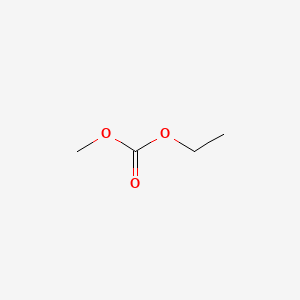
Ethyl Methyl Carbonate (EMC) is a linear asymmetric carbonate used primarily as a co-solvent in lithium-ion battery electrolytes. Researchers utilize this API to optimize ionic conductivity and low-temperature discharge characteristics.
Description
Comprehensive Product Overview
In the field of electrochemistry, the viscosity and dielectric constant of the solvent blend define the mobility of lithium ions. Specifically, Ethyl Methyl Carbonate combines the low viscosity of dimethyl carbonate (DMC) with the superior low-temperature properties of diethyl carbonate (DEC). Additionally, researchers select this molecule for its ability to form a stable Solid Electrolyte Interphase (SEI) on graphite anodes when blended with cyclic carbonates like Ethylene Carbonate (EC). Therefore, whether you investigate high-voltage cathode stability or develop electrolyte additives, this compound delivers reliable chemical support across various laboratory conditions.
Zyntex maintains a transparent production chain to ensure a precise impurity profile for every batch, focusing on the limitation of water to below 10 ppm. Moreover, our quality control team verifies every lot for electrical conductivity and metal ion content to ensure the safety of high-energy-density systems. For instance, we optimize the purity to support the development of non-aqueous electrolytes used in supercapacitor research. As a result, your facility receives a high-purity solvent for advanced studies into ion-solvation shells and the oxidative decomposition of carbonate solvents.
Modern energy science relies on high-purity linear carbonates to address the increasing power demands of electric vehicles and portable electronics. Because Ethyl Methyl Carbonate possesses a documented wide liquid temperature range and high flash point relative to smaller homologs, it remains a primary focus for studies involving battery safety and flame retardancy. Ultimately, Zyntex provides a dependable foundation for your next innovation in green energy technology and specialized pharmaceutical intermediate synthesis.
Specialized Technical Applications
This high-purity asymmetric carbonate is vital for the following research and production sectors:
🔋 Battery Electrolytes
Scientists use EMC as a primary co-solvent to adjust the viscosity and improve the low-temperature discharge of Li-ion batteries.
🧪 Organic Synthesis
Researchers include this compound in protocols focused on the methoxycarbonylation and ethoxycarbonylation of various organic substrates.
⚡ Supercapacitor Design
Biotechnicians and physicists utilize this molecule to study the development of high-voltage electric double-layer capacitors (EDLC).
🏗️ Specialty Solvents
This compound serves as a core solvent for engineering high-purity resins and specialized coatings requiring low toxicity levels.
Technical Specifications
| Parameter | Specification Standard |
|---|---|
| Product Name | Ethyl Methyl Carbonate (CAS 623-53-0) |
| Molecular Formula | C4H8O3 |
| Purity | Battery Grade (Min. 99.99%) |
| Moisture (H2O) | Max. 10 ppm |
| Appearance | Colorless transparent liquid |
🔬 Scientific Data: For detailed boiling point curves, viscosity vs. temperature data, and safety information, consult: PubChem Entry: Ethyl Methyl Carbonate (External Link)