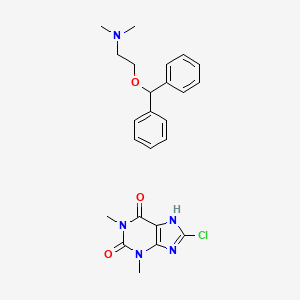
Dimenhydrinate
USP/BP/EP-grade Dimenhydrinate (CAS 523-87-5), 98–102%, supplied wholesale by Zyntex to licensed producers. Antihistamine salt API for travel sickness tablets, chewables, suppositories and injections. CoA and SDS.
Description
Dimenhydrinate Product Overview
Dimenhydrinate is a salt of two compounds: the antihistamine diphenhydramine and 8-chlorotheophylline, a theophylline derivative. It is a white, odorless crystalline powder that is slightly soluble in water and melts at about 102–107°C.
Pharmaceutical companies use it in tablets, chewable tablets, chewing gum, suppositories and injections for the prevention and relief of travel sickness and nausea. The antihistamine part, available separately as Diphenhydramine Hydrochloride, is the main active component. Other first-generation antihistamines in our range include Chlorpheniramine maleate.
Zyntex supplies it from qualified API producers, only to licensed pharmaceutical companies. For the related methylxanthine API, see Aminophylline Anhydrous.
Key Applications of Dimenhydrinate
Main application areas:
💊 Tablets
API for travel sickness tablets.
🍬 Chewable Forms
API for chewable tablets and gum.
💉 Injections
API for injectable formulations.
🔬 Generic Development
Development and reference material.
Dimenhydrinate Technical Specifications
| Parameter | Standard Value |
|---|---|
| Product Name | Dimenhydrinate (USP / BP / EP Pharmaceutical API Grade) |
| CAS Number | 523-87-5 |
| Assay / Purity | 98.0% – 102.0% (Calculated on Dried Basis) |
| Appearance | White, crystalline, odorless powder |
| Melting Point | 102 °C to 107 °C |
| Loss on Drying | ≤ 0.5% |
| Documents | CoA and SDS with every lot |
⚠️ Safety & Handling: Pharmacologically active substance; harmful if swallowed and may cause drowsiness. Avoid inhalation of dust and contact with skin and eyes; wear gloves, eye protection and dust protection. Store in tightly closed containers in a cool, dry place. Always consult the Safety Data Sheet (SDS) for full classification and handling instructions.
Frequently Asked Questions
What is the relationship between dimenhydrinate and diphenhydramine?
It is a salt of diphenhydramine and 8-chlorotheophylline. Diphenhydramine is the main active component.
Who can purchase this API?
It is supplied only to pharmaceutical companies holding the licenses required for API purchase and use in their country.
How can I get a price and documents?
Prices depend on quantity, packaging and destination. Contact us with your required volume to receive a quotation together with the CoA and SDS.