Bismuth Hydroxide
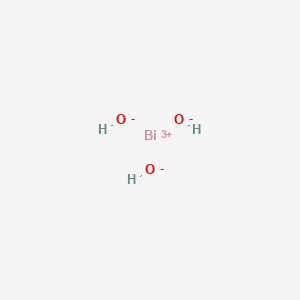
Bismuth (III) Hydroxide [Bi(OH)3] by Zyntex is a high-purity white amorphous powder (CAS 10361-43-0). It is a vital intermediate in the production of high-performance bismuth salts and serves as an effective absorbent in specialized chemical and laboratory processes.
Description
Comprehensive Product Overview
Excellent chemical reactivity provides a major advantage in synthetic pathways. Bismuth (III) Hydroxide works as a high-purity precursor for the production of bismuth oxide and bismuth subnitrate. It helps manufacturers achieve precise stoichiometry in complex inorganic reactions. For instance, it is a primary ingredient used in the synthesis of specialized bismuth carboxylates. Consequently, it is vital for industries requiring high-purity chemical intermediates. As a result, Zyntex ensures rigorous quality monitoring and verified chemical analysis for our supply. This ensures maximum consistency and reliable reactivity in your downstream manufacturing processes.
Moreover, Zyntex supplies Bismuth (III) Hydroxide for specialized laboratory and industrial research. This compound acts as an absorbent for various gases and a purification agent in metallurgical processes. It pushes the boundaries of efficient chemical separation and refinement. At the same time, its role in modern catalysis is expanding, serving as a support or active phase in environmental oxidation reactions. In short, our product serves as a dependable “molecular bridge.” It supports both traditional chemical salt manufacturing and innovative material science applications.
Recently, scientific interest in Bismuth (III) Hydroxide for its role in wastewater treatment and heavy metal removal has grown. It provides a stable surface for the adsorption of harmful anions and pollutants. Because of this, Zyntex offers technical and high-purity grades with controlled physical properties. These formats suit modern environmental engineering and green chemistry projects. Ultimately, choosing Zyntex secures a reliable and transparent chemical supply chain. We balance inorganic expertise with strict batch-to-batch quality protocols. To conclude, our commitment ensures your manufacturing processes achieve the highest levels of chemical performance and process efficiency.
Key Industrial Applications
This high-reactivity hydroxide is vital in these four sectors:
🧪 Salt Manufacturing
Primary intermediate for synthesizing bismuth nitrate and citrate. Thus, it is a core building block for the bismuth industry.
🧬 Pharma Precursor
Used as a starting material for various bismuth-based APIs. Consequently, it supports the development of digestive health medications.
⚙️ Catalyst Synthesis
Used in the preparation of mixed-metal oxide catalysts. Undoubtedly, it is essential for advanced industrial oxidation pathways.
🌍 Water Treatment
Acts as an absorbent for removing pollutants from aqueous solutions. Specifically, it supports innovative environmental remediation.
Technical Specifications
| Parameter | Standard Value |
|---|---|
| Product Name | Bismuth (III) Hydroxide |
| Molecular Formula | $Bi(OH)_3$ |
| Molecular Weight | 260.00 g/mol |
| CAS Number | 10361-43-0 |
📝 Storage Note: Store Bismuth (III) Hydroxide in a cool, dry place within tightly sealed containers. Therefore, protect the material from atmospheric moisture and carbon dioxide to prevent degradation or conversion into bismuth subcarbonate over time.