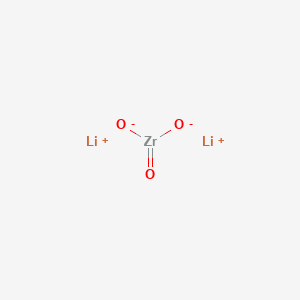
Lithium Zirconate
High-purity Lithium Zirconate (Li2ZrO3, CAS 12031-83-3), min. 99%, supplied wholesale by Zyntex. Lithium ceramic for high-temperature CO2 capture, battery cathode coatings and fusion breeder research. CoA and SDS with every lot.
Description
Lithium Zirconate Product Overview
Lithium zirconate (Li2ZrO3) is a white ceramic powder that is insoluble in water and stable at high temperatures. It reacts reversibly with carbon dioxide at about 450–700°C, forming lithium carbonate and zirconia, and releases the CO2 again at higher temperatures.
This property makes it one of the most studied high-temperature CO2 sorbents for carbon capture and sorption-enhanced hydrogen production. Battery material producers use thin lithium zirconate coatings on cathode particles to improve stability at high voltage. In fusion research, it is one of the candidate ceramics for breeding tritium.
Related lithium ceramics in our range include Lithium Titanate and Lithium niobate, and lithium sources such as Lithium carbonate.
Key Applications of Lithium Zirconate
Main application areas:
🌍 CO2 Capture
High-temperature CO2 sorbent.
🔋 Battery Coatings
Protective coating on cathode materials.
⚛️ Fusion Research
Candidate tritium breeder ceramic.
🔬 Ceramics Research
Lithium ceramic for materials studies.
Lithium Zirconate Technical Specifications
| Parameter | Standard Value |
|---|---|
| Product Name | Lithium Zirconate |
| CAS Number | 12031-83-3 |
| Molecular Formula / Weight | Li2ZrO3 / 153.10 g/mol |
| Purity | Min. 99% |
| Grade | Technical / Ceramic Grade |
| Documents | CoA and SDS with every lot |
⚠️ Safety & Handling: May cause skin, eye and respiratory irritation. Avoid dust formation and wear dust protection and eye protection. Store in tightly closed containers in a dry place. Always consult the Safety Data Sheet (SDS) for full classification and handling instructions.
Frequently Asked Questions
How does lithium zirconate capture CO2?
At about 450–700°C it reacts with CO2 to form lithium carbonate and zirconia; heating further releases the CO2 and regenerates the sorbent.
Which particle sizes do you supply?
Micron and submicron powders are available. Please specify particle size and purity when requesting a quote.
How can I get a price and documents?
Prices depend on quantity, packaging and destination. Contact us with your required volume to receive a quotation together with the CoA and SDS.