Gallium(III) Oxide
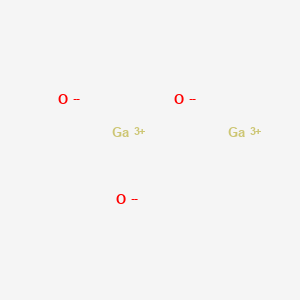
Gallium(III) Oxide is a critical UWBG semiconductor material. Researchers utilize this oxide to study high-voltage power devices and solar-blind ultraviolet detection technologies.
Description
Comprehensive Product Overview
In the evolving field of power semiconductor physics, the Baliga Figure of Merit (BFOM) defines the potential of a material for high-voltage applications. Specifically, Gallium(III) Oxide possesses an ultra-wide bandgap of approximately 4.8 eV, significantly surpassing both Silicon Carbide (SiC) and Gallium Nitride (GaN). Additionally, researchers select this molecule due to the availability of large-scale melt-grown substrates, which facilitates more cost-effective wafer production. Therefore, whether you develop high-efficiency power converters or harsh-environment sensors, this compound delivers reliable performance across various industrial conditions.
Zyntex maintains a rigorous purification process to ensure ultra-low levels of transition metal impurities that can act as deep-level traps. Moreover, our quality control team verifies every lot for phase purity using X-ray diffraction (XRD) to guarantee the dominance of the monoclinic $beta$-phase. For instance, we optimize the particle size distribution to support the development of high-quality thin films via pulsed laser deposition (PLD) or molecular beam epitaxy (MBE). As a result, your lab receives a high-purity reagent for advanced studies into Schottky barrier diodes and field-effect transistors.
Modern material science relies on high-quality Gallium Oxide to drive innovations in solar-blind UV-C detection and flame sensing. Because this oxide is naturally transparent to visible light while absorbing deep-UV radiation, it remains a primary focus for studies involving ozone layer monitoring and missile warning systems. Ultimately, Zyntex provides a dependable foundation for your next innovation in solid-state lighting and specialized power engineering.
Specialized Semiconductor Applications
This ultra-wide bandgap oxide is vital for the following research and production sectors:
⚡ Power MOSFETs & Diodes
Engineers use $Ga_2O_3$ to fabricate devices with extremely high breakdown fields for electric vehicle inverters and power grids.
☀️ Solar-Blind UV Detectors
Researchers include this compound in protocols focused on sensors that detect UV-C light without interference from solar background radiation.
📡 RF & Microwave Devices
Biotechnicians and physicists utilize Gallium Oxide for high-frequency applications requiring high thermal and chemical stability.
🔬 Gas & Flame Sensing
This compound serves as a core reactant for developing high-temperature gas sensors and flame detection systems in industrial furnaces.
Technical Specifications
| Parameter | Specification Standard |
|---|---|
| Product Name | Gallium(III) Oxide (CAS 12024-21-4) |
| Molecular Formula | $$Ga_2O_3$$ |
| Purity | 99.9% – 99.999% (Electronic Grade) |
| Bandgap | ~4.8 eV (Beta-phase) |
| Appearance | White Crystalline Powder |
🔬 Scientific Data: For detailed band structure, phase transitions, and chemical profiling, consult: PubChem Entry: Gallium(III) Oxide (External Link)