Germanium Oxide

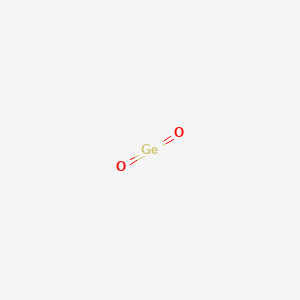
Germanium Oxide is a premium-grade, white crystalline powder inorganic optoelectronic compound carrying CAS number 1303-33-9. Processed under strict industrial quality compliance, this high-purity metal oxide exhibits exceptional refractive index parameters and reliable thermal-chemical matrix stability, making it an ideal core choice for manufacturing specialized infrared (IR) transmissive optical glasses, advanced telecommunication fiber optic cores, and modern wide-angle camera lenses globally.

SKU: 1303-33-9 Category: Tags: ,
Description
Germanium Oxide represents an elite-grade inorganic dioxide active substance refined under strict molecular quality guidelines to fulfill advanced optoelectronic compounding and specialized glass manufacturing standards.
Zyntex supplies high-purity Germanium Oxide (CAS 1303-33-9) tailored specifically for global fiber optic manufacturing plants, military infrared sensor laboratories, and international catalytic synthesis loops.
Functioning as a highly specific optical core dopant and vitrification lattice modifier, it delivers precise substance profiles that ensure uniform liquid batch integration and highly predictable reactive kinetics in dense silica melting matrices. Furthermore, its strictly minimized transition metal impurities and optimized hexagonal crystalline geometry make it an ideal selection for sensitive single-crystal growth and continuous chemical vapor deposition (CVD) processes. Accordingly, formulation engineers specify this active substance to stabilize modern dielectric carriers and maintain exact refractive integrity across continuous processing cycles.

Refractive Index Enhancement and Glass Melt Matrix Homogeneity

Excellent crystalline density configuration and outstanding low optical dispersion profiles provide a distinct operational edge when engineering modern fast-acting telecommunication wavelengths. This active industrial solid operates by facilitating specialized high-density atomic packaging paths to sustain refractive glass matrices, supplying the exact chemical mechanisms required to mitigate trace signal attenuation vectors without altering raw material structural uniformity. It assists processing engineers in maintaining strict active concentration uniformity across high-speed mechanical blending and vacuum sintering lines, mitigating trace phase separation risks within automated volumetric melting equipment. For instance, specialized optoelectronic facilities incorporate this high-purity oxide powder as a core active component in targeted wide-angle precision lens production. As a consequence, it maximizes the technical throughput of automated fiber drawing towers and continuous quality assurance checks. Consequently, Zyntex coordinates clean room crystallization paths to eliminate downstream raw material variance shifts from your factory schedule.

In addition to this, Zyntex coordinates climate-controlled logistics for pilot-scale manufacturing operations and advanced aerospace sensor development centers. The compound maintains its refined structural integrity under strict storage parameters, preventing atmospheric moisture absorption or physical compaction during automated mechanical blending steps. It advances contemporary electronic engineering by providing a thoroughly analyzed, highly predictable germania raw material that meets international industrial monograph standards. Simultaneously, it remains a critical chemical standard for routine inductively coupled plasma (ICP-OES) elemental calibration assays and high-voltage semiconductor validation testing loops. In brief, our product functions as a dependable chemical foundation, supporting both the performance of commercial industrial batches and the analytical rigor of specialized industrial laboratories.

Primary Industrial Sectors for Germanium Oxide

This high-purity crystalline active inorganic compound delivers crucial technical value within these four primary industrial sectors:

📡 Fiber Optic Cores

Primary refractive index modifying hammadde source used for formulating advanced single-mode and multi-mode telecommunication glass fibers. Hence, it directly supports optimal bandwidth control lines.

🎛️ Infrared Optics

Utilized as an ultra-clear transmissive base to compound professional military night-vision sensors, thermal imaging lenses, and spectrometer windows. Clearly, it is key for uniform dissolving patterns.

⚗️ Polyester Catalysis

Acts as an essential condensation catalyst standard for manufacturing specialized high-transparency polyethylene terephthalate (PET) bottles and technical resins. Resultantly, it guarantees excellent matrix clarity.

🏢 Phosphor Production

Used as a professional high-purity host component for validating advanced fluorescent lighting displays and high-efficiency electroluminescent matrices. Specifically, it confirms optimal reaction pathways.

Technical Specifications

ParameterStandard Value
Product NameGermanium Oxide (Germanium (IV) Oxide / Germania)
Assay / Purity (GeO2)Min 99.99% (4N Fiber Optic Grade) / 99.999% (5N Electronic Grade)
AppearanceWhite crystalline powder
Refractive Index (n)1.650 – 1.735 (Depending on crystalline modification)
Melting Point1,115°C (Hexagonal form)
CAS Number1303-33-9

⚠️ Safety & Handling (INDUSTRIAL PARTICULATE / RESPIRATORY IRRITANT): Germanium Oxide is a highly stable, non-flammable and non-toxic covalent crystal matrix. However, direct inhalation of fine high-purity micro-powder dust during dispensing loops triggers mild mechanical respiratory membrane tract irritation, dust accumulation stress, and immediate localized physical eye irritation. Therefore, store strictly inside original high-density airtight container structures placed within a cool, exceptionally dry, and properly ventilated raw material warehouse facility isolated from atmospheric moisture and strong concentrated alkaline compounds. Prevent airborne dust cloud dispersion during all glass compounding cycles. Proper personal protective equipment (PPE)—including industrial processing gloves, secure safety protective glasses with integrated side shield frames, and an approved particulate-filter dust mask—must be worn during all compounding phases. Review the Safety Data Sheet (SDS).